Rollout Context
Web development for a business that sells the same product three ways
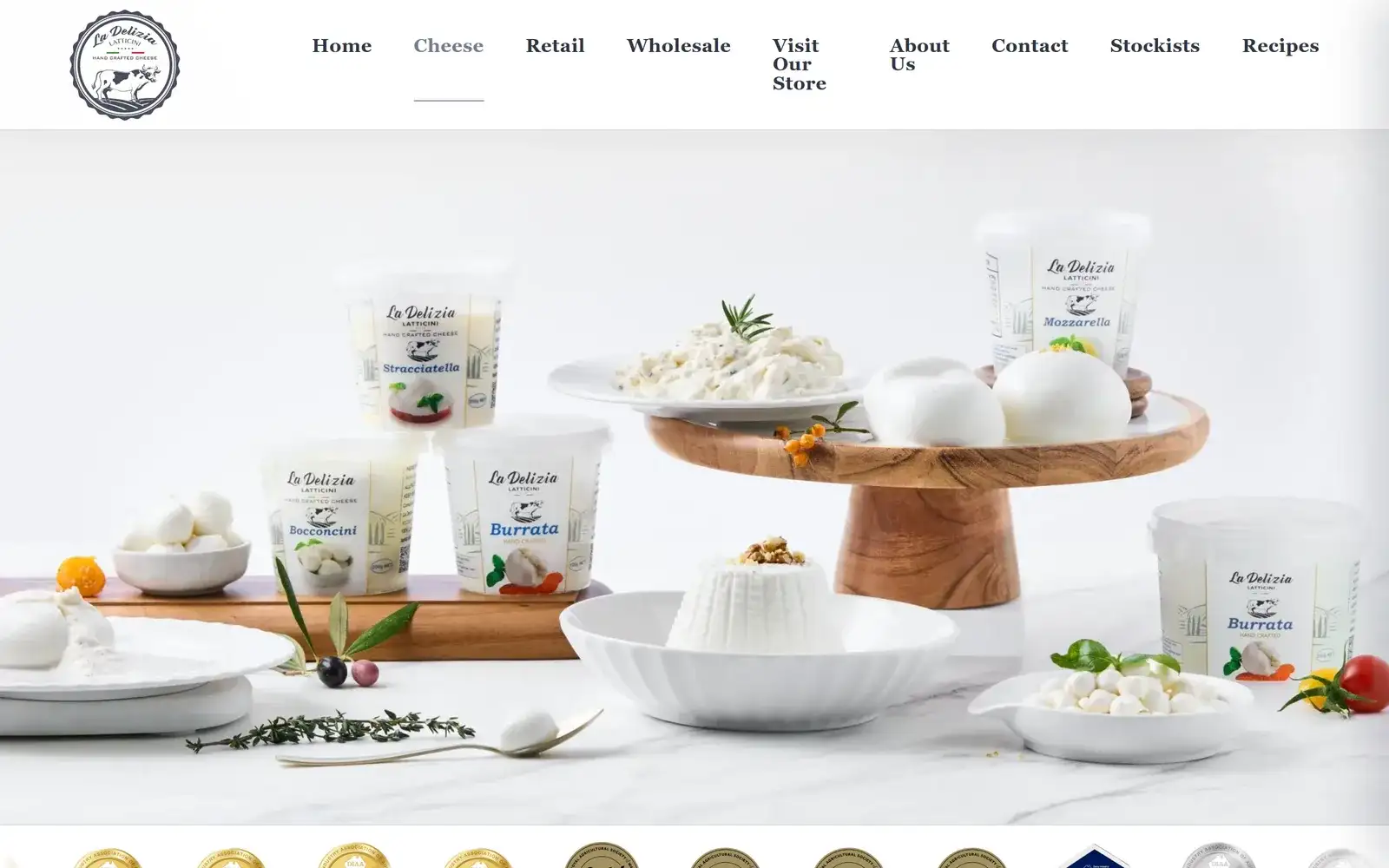
La Delizia Latticini handcrafts fresh Italian cheese daily in East Victoria Park, using milk from local WA dairy farmers. Burrata, stracciatella, mozzarella, bocconcini, ricotta, stracchino, perline and smoked scamorza — 23 products, all fresh, all made the same week you eat them.
The interesting problem is not the cheese. It is that the business sells it three different ways, and each way needs a different website.
One product, three completely different customers
A chef ordering for a restaurant wants the food service format and the weight. Is the scamorza a 950 gram log? Does the burrata come in a case? They are making a menu costing decision, and vague product copy wastes their time.
A shopper wants to know where to buy it. They tasted burrata at a restaurant, want to buy some, and their actual question is “which deli near me has this?” Case sizes are irrelevant to them.
A deli or gourmet grocer is somewhere in between — buying to resell, needing both trade terms and enough product story to sell it on.
The common mistake is to build one product page and try to serve all three. It produces a page cluttered with information most visitors don’t want, where nobody finds their answer quickly. The trade buyer scrolls past retail language; the shopper scrolls past case quantities; both leave.
So we separated them by route. Retail, wholesale and stockists each get a dedicated page, written for one audience, linked clearly from the navigation. The product pages carry the factual detail — format, weight, food service description — that a trade buyer needs, while the retail and stockist paths handle the shopper’s question directly.
That last one deserves its own point.
A stockist page is a conversion page
“Where can I buy this?” is the most common question a food brand with retail distribution receives, and it is astonishing how many producer websites answer it badly or not at all.
Latticini has a dedicated stockists page listing the delis and grocers carrying the range. It costs almost nothing to maintain and it converts intent that would otherwise evaporate — someone who wants your product right now and cannot work out how to get it usually just buys something else.
It is also good for the stockists, which makes it good for the wholesale relationship. A producer that actively sends customers to its retailers is a producer retailers want to keep stocking.
Recipes exist for the people who aren’t shopping yet
The product pages capture people who already know they want burrata. The recipe section exists for everyone earlier in that journey.
Someone searching for what to do with stracciatella, or a dish for a dinner party, is not searching for a cheesemaker. But they are exactly the person who becomes a customer once they know the brand exists. Recipes, browsable by season, give the site a reason to appear in those searches and a reason for people to return between purchases.
For a food producer this is usually the highest-value content on the site, because product pages can only ever be found by people who already know what they want.
Sharing a platform without sharing an identity
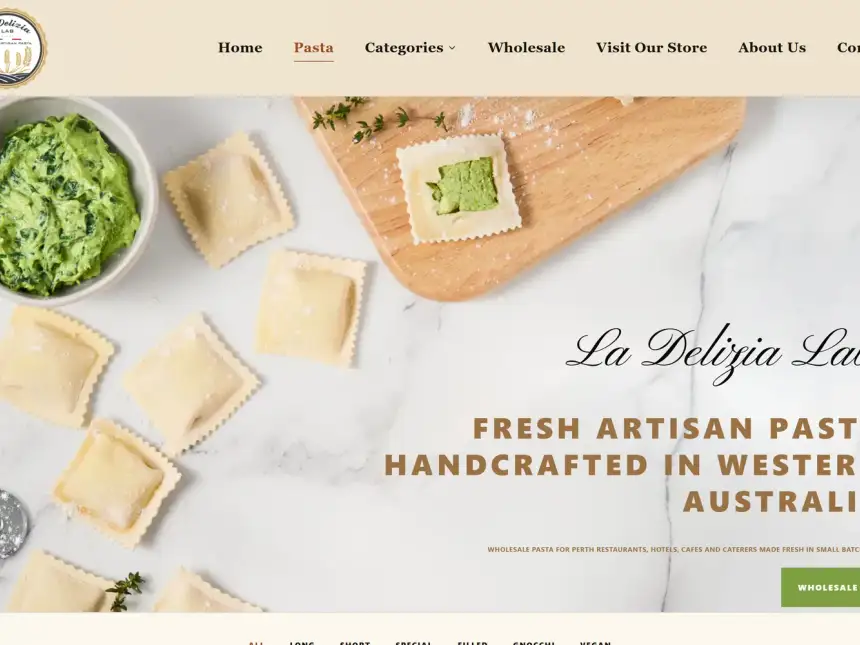
Latticini’s 36 pages run on the same Astro codebase as the La Delizia Lab pasta brand — the same templates, the same components, the same build pipeline, the same domain.
You would not know it from looking. Latticini is cool navy and white with a dairy crest; Lab is warm gold and cream with a wheat crest. Each brand carries its own header, footer, palette, typography and catalogue data, and the shared templates render whichever brand’s data the current route belongs to.
The benefit is compounding. Both brands share one domain’s search authority instead of splitting it across two weaker sites, and any improvement to the shared templates lands on both at once. The cost of the second brand is its content and its theming — not a second website.
Across both brands, all 85 pages, the production build ships no JavaScript files at all. Pages arrive finished, with nothing to download and run first, which matters on a phone in a deli with poor reception.
Built to grow without a developer
The 23 cheeses live in a structured catalogue file rather than in hand-built pages. Adding a product creates its page, its category listing entry, its navigation link and its sitemap entry automatically.
For a producer whose range shifts with seasons and supply, that difference decides whether the website stays current or slowly drifts out of date — which is the real reason most small food business websites end up wrong.
The result: a cheese website where chefs, shoppers and stockists each get their own path, 23 products have their own pages with real trade detail, recipes bring in people who aren’t shopping yet, and the whole thing shares a platform — but not an identity — with the sister pasta brand.
See the live site at La Delizia Latticini, or read more about our Web Design & Development service. The cheese photography used across the site is covered in our La Delizia Latticini product photography case study.