Rollout Context
How the Acqua e Sale website was redesigned, rebuilt and migrated
Acqua e Sale is a Sardinian restaurant and wood-fired pizzeria on Fitzgerald Street in North Perth. Since opening in 2020 it has collected ten Restaurant & Catering Awards for Excellence and certifications, including the Italian Restaurant category for Western Australia in 2023, 2024 and 2025, national recognition in 2023 and 2024, and Casual Dining Restaurant of the Year for Western Australia in 2026. Chef Concas was named Young Achiever in 2022.
The website told none of that story. It was the brief in one sentence: make one of Perth’s most popular restaurants stand out online not only for its food, but for its image.
The old website: slow, dated and hard to find
The previous site was built in 2020 on WordPress with the Elementor page builder, and it showed its age.
It looked like a template. The homepage opened on a dark, tinted photograph of raw pasta behind the words “Ristorante” and “Pizzeria”. The restaurant’s real strengths, its plated dishes, its awards and its Sardinian roots, were either buried further down the page or missing entirely.
It was slow on phones. We measured the old homepage on 14 October 2026, with Google Lighthouse’s standard mobile test, against the old server, which was still online. Across three runs it scored 55 to 56 for performance, and nothing appeared on screen for 10.6 seconds. The page asked for 20 separate stylesheets, 15 scripts and almost 300 web-font files before it could settle, much of it page-builder code that loaded on every visit whether the page used it or not.
It was nearly invisible to search. WordPress had been left close to its defaults. The page titles Google showed for the restaurant read “About •”, “Menu •” and “Set Menus •”, with no restaurant name, cuisine or suburb. The homepage had no main heading and no page descriptions. The only structured data on the site described a generic organisation: no restaurant, no address, no opening hours, no menu. For a restaurant, those details are what Google and AI search use to decide who appears for “Italian restaurant North Perth”.
A restaurant website designed around how diners choose
People pick a restaurant in a fairly predictable order. They want to see the food, trust that it’s good, check the menu and prices, then book. The new site is laid out in exactly that order.
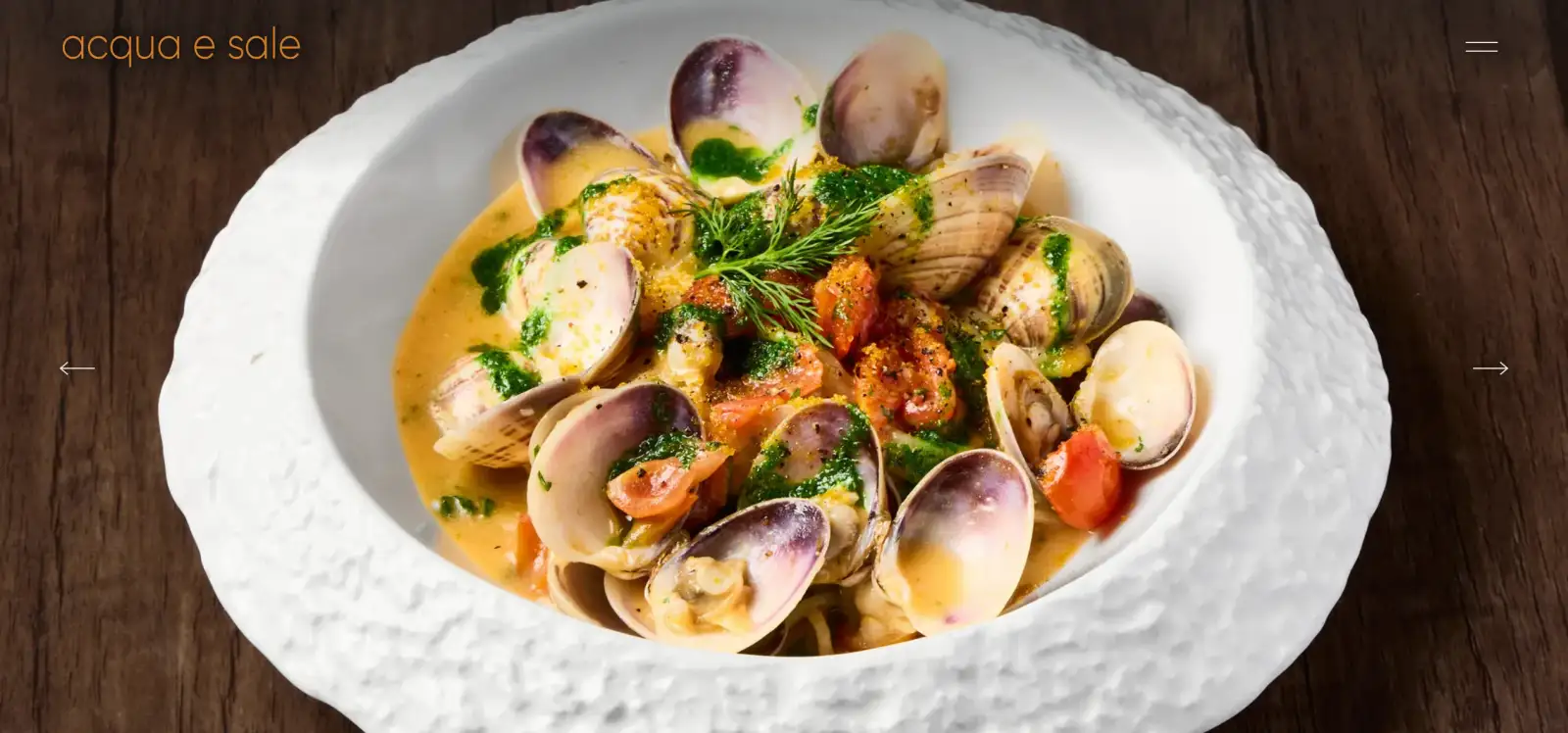
The food comes first. The homepage opens on a full-width photograph of a signature dish, rotating between three hero images. Below it, five rails, one each for entrées, pastas, pizzas, desserts and wines, let diners scroll through the menu visually, with seven photographs per course. Hovering on a plated dish crossfades to a close-up. The gallery holds 76 photographs, filterable by course.
The reputation comes second. Directly under the hero sits the award wall: all ten Restaurant & Catering awards and certifications, shown oldest first so they read as a track record from 2022 to 2026. It’s the first thing a diner sees after the food, which is exactly where it earns its keep.
The menu is real. The October 2026 à la carte menu, children’s menu and three set menus are written as text, with prices aligned on dotted leaders and dietary labels on every dish. A menu in a PDF is hard to read on a phone and almost useless to search engines. A menu in text is easy to read, easy to update and easy for Google to index, down to the La Delizia Latticini burrata on the starters list.
Booking is never more than one tap away. Book a table, order takeaway and buy an eGift card all connect to the restaurant’s NowBookIt account, with the booking widgets styled in the site’s own colours so the handover feels seamless.
An image that matches the food
A restaurant at this level needs a website that feels like the dining room, not like a theme. The visual identity was built around the restaurant’s bronze wordmark: deep charcoal backgrounds, a bronze accent, Bodoni Moda for the display type and a script line for “Traditional Sardinian Cuisine”.
The Sardinian story runs through the whole site. The outline of Sardinia is drawn from real coastline map data and used three times: as the frame around the chef’s portrait, on the About page, and behind the contact card at the foot of the page. Because all three come from one source, they always match.
Photographs are cut as soft, irregular shapes rather than hard rectangles, with each frame’s corners varied so no two neighbours look stamped from the same mould. Movement follows one consistent personality: slow, cinematic reveals that finish within 800 milliseconds, using exactly three easing curves across the entire site. For visitors who prefer reduced motion, every animation switches off automatically.
Built for speed
The new site is built with Astro and hosted on Netlify. Every page is generated in advance and served as finished HTML, so a phone doesn’t have to assemble the page from page-builder code after it arrives.
The difference is measurable. Tested with the same Lighthouse version and settings on 14 October 2026, against the old WordPress server and the live new site:
- Mobile performance: 93, up from 56 (median of three runs each).
- First paint on mobile: 1.6 seconds, down from 10.6 seconds.
- Requests to load the homepage on mobile: 22, down from 337.
- Desktop performance: 100, in three runs out of three, with the main content on screen in 0.5 seconds.
- Best Practices and SEO: 100 on both mobile and desktop.
- Layout shift: effectively zero (0.002), so nothing jumps around as images load.
Speed came from deliberate choices rather than a lucky score. Fonts are self-hosted and preloaded. Every photograph is converted to modern WebP and served at the right size for the screen. The first hero image is preloaded at high priority while the other two hero images wait until the page has finished loading. The site sends no separate JavaScript files at all; the little scripting it needs for the rails, the hero and the navigation is inlined.
Built to be found on Google and by AI search
Search for a restaurant is increasingly answered directly, in Google’s map results or by AI assistants such as ChatGPT, Gemini and Perplexity. Both reward websites that state the facts clearly, in a form machines can read. This is what generative engine optimisation (GEO) means in practice for a restaurant.
Every page names the restaurant and the suburb. Titles such as “Acqua e Sale · Sardinian Restaurant & Pizzeria, North Perth” and “Menu · Acqua e Sale, North Perth” replace “Menu •”. Each page has its own description, a single main heading and share images for social media.
The restaurant is described in structured data. Every page carries Restaurant markup with the address, map coordinates, phone, opening hours, price range, cuisines (Italian, Sardinian and pizza), the booking link and all ten awards. All of it is generated from the same data the pages display, so the markup can never disagree with what diners see.
The menu is described too. The menu page publishes all 11 sections and 56 dishes, with 59 prices, as structured Menu data. When someone asks an AI assistant what is in the Zuppetta Arcipelago or how much a pizza costs at Acqua e Sale, the answer is on the page in a form it can read.
The photographs are indexed. An image sitemap lists 136 photographs across the six pages, each with descriptive alt text, so the restaurant’s dishes can surface in Google Images.
A careful move off WordPress
A new website shouldn’t cost a restaurant the links and rankings it already has. Before switching anything over, we audited the old site through WordPress’s own data and the Internet Archive and mapped every address that mattered:
- The four old pages, which WordPress served at addresses like
?page_id=182, now redirect permanently to/menu/,/set-menus/,/find-us/and the homepage, even when a link carries tracking tags from Facebook or Google Ads. - Five old set-menu PDFs, and the Cicchetti Sardi tasting menu, redirect to the set menus page.
- Retired event flyers and WordPress archive pages return a proper “page not found” with links to the menu, set menus and Find Us page, rather than quietly dumping visitors on the homepage.
We tested the whole map with 88 automated checks before launch, covering redirects, tracking parameters, error pages and both sitemaps.
The result: Acqua e Sale’s website now looks and performs like the restaurant it represents. Diners see the food first, the awards second and the booking button everywhere. Phones get a fast page, Google gets a restaurant it can understand, and the full menu is ready for every search engine and AI assistant that’s asked where to eat Italian in North Perth.
See the live site at acquaesale.com.au, read our guide to restaurant and café websites that win direct bookings, or find out more about our web design and development service in Perth.