

The Dilemma: Strong In-Clinic Care, Weak Digital First Impression
In healthcare and allied wellness practices, trust is the ultimate currency. When a patient suffers from acute back pain, postural strain, or a sports injury, they search with urgency. They evaluate clinic legitimacy in seconds based on visual credibility, practitioner qualifications, page speed, and booking simplicity.
Body Therapy Chiropractic, a busy multidisciplinary clinic in Chatswood (Sydney), provided exceptional patient care and already commanded page-one rankings for local search terms. However, their online presence was severely held back by an aging, sluggish Squarespace website.
The clinic faced several costly digital problems:
- Sluggish Mobile Speed: Heavy template scripts slowed the site on mobile, exactly where urgent health searches happen.
- Impersonal Stock Visuals: Generic stock imagery obscured the real clinic environment and the highly credentialed Macquarie University practitioners.
- Buried Conversion Triggers: Pricing was opaque, health fund information was scattered across multiple fragmented pages, and the booking funnel was multi-step and clunky.
- Unrealized Demographic Potential: Chatswood has one of Sydney’s largest Chinese-speaking populations, but the legacy site barely addressed non-English speakers despite both resident practitioners being fluent in Mandarin and Cantonese.
Amplify Creative Lab was engaged to execute an end-to-end website redesign, technical migration, and custom web development project to transform the clinic’s digital presence into a modern, patient-first conversion engine.
1. Zero-Downtime Migration: Protecting Hard-Earned Google Rankings
When a clinic already ranks on page one of Google, redesigning a website carries substantial business risk. A careless platform switch can break URLs, generate 404 crawl errors, wipe out search rankings, and sever clinic email routing during DNS cutovers.
We managed the entire technical migration protocol seamlessly:
- Sitemap & URL Mapping: We extracted the entire legacy sitemap and created 50+ verified 301 redirect rules, routing every old condition, practitioner, and service URL to its new optimized destination.
- Blog Equity Preservation: All 31 existing clinical blog articles were migrated with matching URLs to retain 100% of their historical backlink equity and search indexing.
- DNS & Email Continuity: We isolated the clinic’s MX and email verification records prior to DNS transfer, switching over hosting and SSL certificates with zero email disruption or appointment loss.
2. Designing Around the Patient Decision Journey
A medical website should not be structured like a corporate brochure. It must follow the exact psychological sequence an injured patient moves through:
| Patient Question | Old Squarespace Website | New Custom Rebuilt Platform |
|---|---|---|
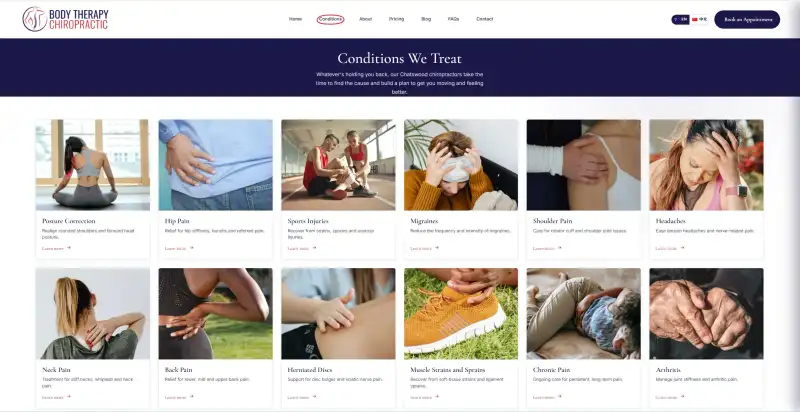
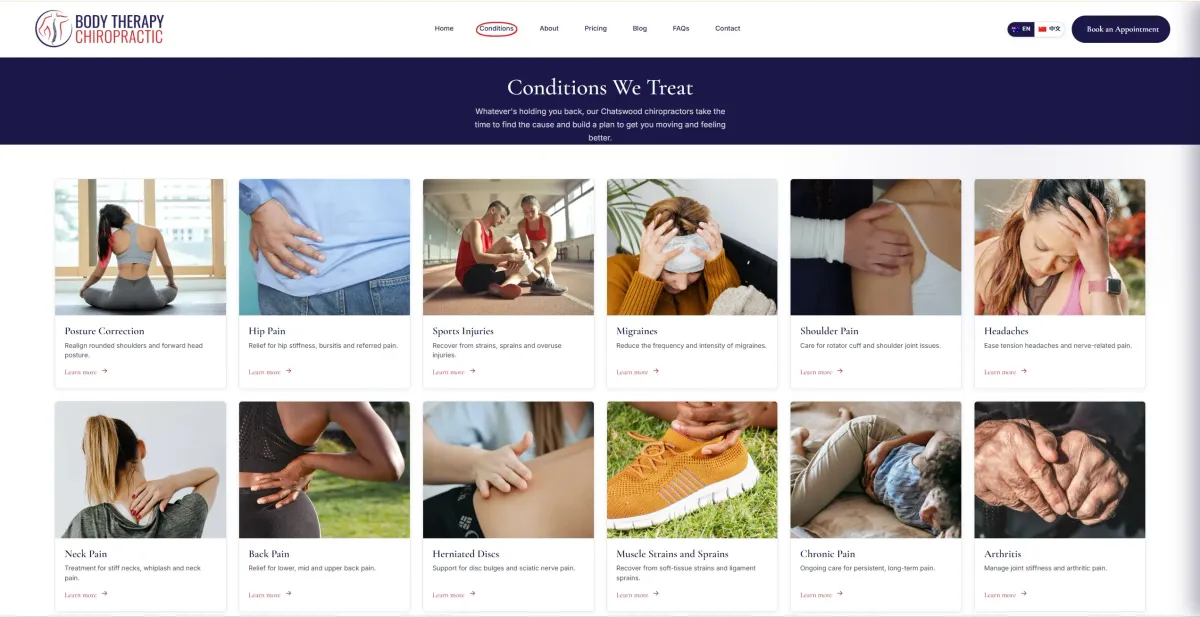
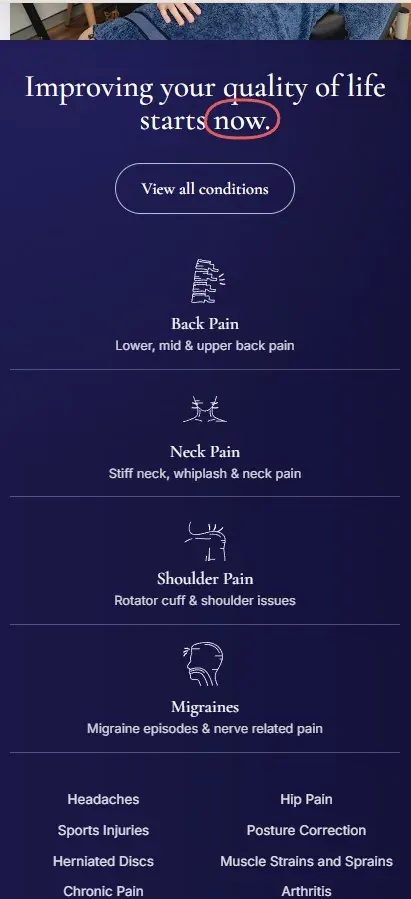
| “Can you help my specific pain?” | Single long bulleted list of services | 12 individual condition landing pages (sciatica, migraines, posture, etc.) |
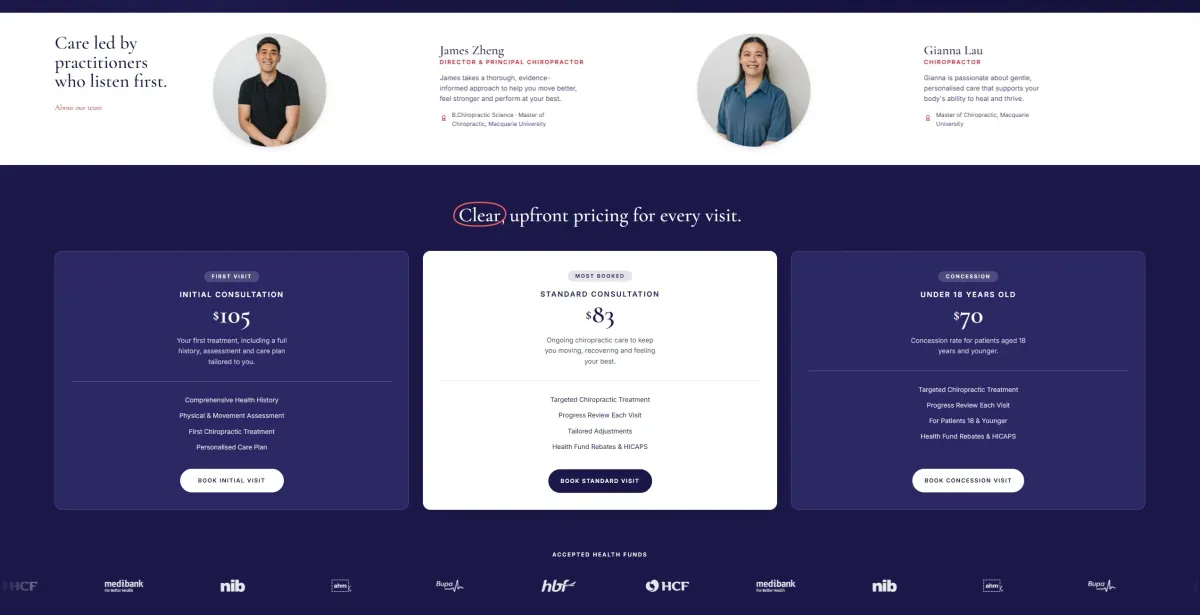
| “Who will be treating me?” | Anonymous stock photos & generic copy | Authentic clinic photography, named profiles & AHPRA credentials |
| “How much will it cost?” | Hidden pricing requiring phone calls | Transparent fee breakdown ($105/$83/$70) + accepted health fund logos |
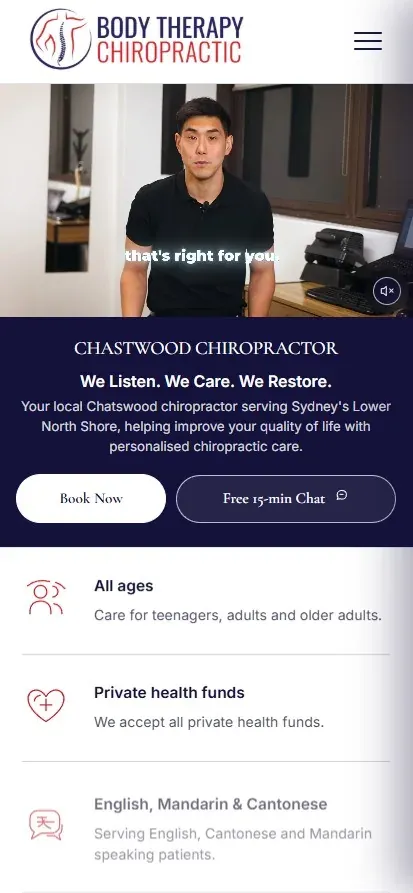
| “How do I book?” | Clunky external link buried in footer | Persistent 1-tap booking button + low-friction 15-minute free chat option |
3. Performance Rebuild: 96 Mobile, 100 Desktop in Lighthouse
Standard website builders (Squarespace, Wix, WordPress with visual page builders) ship megabytes of render-blocking JavaScript and unoptimized CSS to the visitor’s browser. On mobile data connections, this creates significant lag.
We engineered the new Body Therapy Chiropractic platform using Astro static architecture:
- 4.6 KB Total JavaScript: Across all 141 pages, the entire production site ships just a single 4.6 KB script (dedicated solely to background video management). Navigation menus, FAQ accordions, and language toggles operate natively with zero JS overhead.
- Self-Hosted, Preloaded Typography: Fonts are hosted locally rather than fetching external stylesheets from third-party CDNs, eliminating render-blocking network requests.
- Responsive Modern WebP Images: Every clinical photo is automatically generated in multiple device widths, ensuring mobile users never download desktop-sized assets.
- Measured Lighthouse Scores: Tested on 27 September 2026, the homepage scores 96 for performance on mobile and 100 on desktop (the median of three runs each), 100 for SEO and Best Practices on both, and 96 mobile, 100 desktop for accessibility.
4. Native Bilingual Architecture (71 Fully Indexed Chinese Pages)
Rather than bolting on an inaccurate automated Google Translate widget that produces clumsy translations and fails to rank in organic search, we built a complete 71-page native Chinese version.
- Professionally Written Medical Translation: Every condition page, practitioner profile, and FAQ was translated into natural, culturally fluent Chinese that strictly adheres to Australian healthcare advertising regulations.
- Localized Typographic Hierarchy: The site automatically switches font stacks for Chinese characters to prevent awkward line breaks and visual clipping.
- Search Engine Hreflang Tags: Proper bidirectional
hreflangtags notify Google of the English/Chinese counterparts, so it can show multilingual residents in Chatswood and Sydney’s North Shore the version in their language.
5. Full AHPRA Healthcare Advertising Compliance
Under Australian Health Practitioner Regulation Agency (AHPRA) rules, healthcare practitioners are strictly prohibited from using patient testimonials about clinical care, guaranteeing results, or making misleading claims in their advertising.
We implemented an ethical, compliant trust framework:
- Live Google Rating Counter: The build fetches the clinic’s live Google star rating and review count at deploy time, displaying trust metrics while linking directly out to Google rather than embedding prohibited testimonial text.
- AHPRA Registration & Author Bylines: Condition articles feature visible clinical review bylines (e.g., “Medically reviewed by James Zheng, B.Chiro.Sc, M.Chiro”) paired with structured schema markup that verifies medical authority to AI search engines.
What Changed for the Clinic
By replacing a slow, dated website with a custom-built, bilingual one, Body Therapy Chiropractic now has a site that matches the standard of care it delivers:
- No Lost Rankings: Every old URL was redirected to its correct new page, so the page-one rankings the clinic already held came through the migration intact.
- Fast on a Phone: The main content appears in 2.4 seconds on Lighthouse’s simulated mid-range phone over slow 4G, and all 141 pages run on a single 4.6 KB script.
- A Clear Path to Booking: Pricing, practitioner credentials and next steps are visible on every page, with booking never more than one tap away.
- A Second Language Done Properly: 71 Chinese pages with their own addresses and hreflang signals, so Google can index and rank them on their own merit.
Read the complete technical breakdown in our Body Therapy Chiropractic website migration case study, or learn more about our specialized healthcare web design and website development services.
Tap through our website brief builder and we'll recommend the right next step.
Frequently asked questions
Why do healthcare and chiropractic clinics need bespoke website design?
Healthcare decisions are driven by trust, speed, and immediate relevance. Generic website builders load heavy scripts and stock photos that feel impersonal. A custom clinic website highlights real practitioner qualifications, transparent fees, condition-specific guides, and frictionless 1-tap booking.
How do you migrate a healthcare website without losing Google rankings?
A successful migration requires mapping every legacy URL to its new location using strict 301 redirects, preserving existing blog and service URLs, keeping DNS and email records intact without downtime, and submitting updated structured XML sitemaps to Google Search Console.
How does site speed affect patient booking conversions?
Patients looking for help with pain or an injury often search on a phone, in a hurry. Every second a clinic page takes to become usable is a chance for them to go back to the results and choose another clinic, so a fast mobile site gives more of those urgent searches a chance to become bookings.
How do you maintain AHPRA compliance on a medical website?
AHPRA regulations prohibit misleading health outcome claims, 'cure' guarantees, and patient treatment testimonials in clinic advertising. Compliance is maintained by showcasing verified practitioner qualifications, clear fee schedules, evidence-based condition education, and directing review queries to third-party Google profiles without embedding patient testimonial text.