
Core Web Vitals are three specific metrics Google uses to measure real‑world user experience on your website. For Perth restaurants, cafés and bars, these numbers aren’t just technical jargon—they directly influence how many customers see your menu, how many stay long enough to book a table, and how high you rank in local searches like “best pasta Perth” or “coffee near me.”
According to Google’s own data, sites that meet Core Web Vitals thresholds see up to 24% lower bounce rates and significantly higher engagement. In a competitive market like Perth’s hospitality scene, that difference can translate into dozens of lost bookings every week. This guide breaks down each metric in plain English and shows you why they matter for your venue.
What Are Core Web Vitals?
Google’s Core Web Vitals focus on three aspects of page experience: loading speed, visual stability, and interactivity. Each metric is measured on a real user’s device, giving you a true picture of how your site performs for customers in Perth—whether they’re on 5G in the CBD or slower mobile data in the suburbs.
Largest Contentful Paint (LCP): Measures how long it takes for the main content of your page (like a hero image or menu headline) to appear. Aim for under 2.5 seconds. A slow LCP means hungry customers are staring at a blank screen instead of your delicious dishes.
Cumulative Layout Shift (CLS): Quantifies visual stability—how much your page elements jump around while loading. Aim for a score below 0.1. High CLS is frustrating: customers might tap the wrong button or lose their place in your menu, leading to abandoned bookings.
Interaction to Next Paint (INP): Tracks how quickly your site responds to clicks, taps, or keyboard input. Aim for under 200 milliseconds. Slow interactions make your booking form or menu filters feel sluggish, discouraging users from completing their order.
Google uses these metrics as ranking signals. If your site scores poorly, you’ll not only lose customers—you’ll also lose visibility in search results. For Perth restaurant SEO, that’s a double blow.
Why Core Web Vitals Matter for Perth Restaurants and Cafés
Perth’s hospitality customers are increasingly mobile‑first. They’re searching for venues while walking through Northbridge, waiting for a train in the CBD, or relaxing at a beach in Fremantle. If your site is slow or unstable on their phone, they’ll simply tap on a competitor whose site loads instantly.
Consider this scenario: a customer searches for “Sunday brunch Perth” and your café appears. Your hero image takes five seconds to load (poor LCP), the menu items shift as they try to tap (high CLS), and the “Book Now” button doesn’t respond immediately (poor INP). By the time your page is usable, they’ve already moved on to another venue.
This isn’t hypothetical—it’s happening thousands of times every day across WA. Venues that invest in fast, stable websites capture those micro‑moments and turn them into bookings.
How to Measure Your Core Web Vitals
You don’t need to be a developer to check your scores. Free tools like Google PageSpeed Insights and Lighthouse (built into Chrome DevTools) give you a detailed breakdown of your LCP, CLS and INP, along with actionable suggestions for improvement.
Simply enter your website’s URL and you’ll receive a report within seconds. Look for the “Core Web Vitals” section—if any metric is flagged in red, that’s an area where your site is falling short of Google’s expectations (and your customers’ patience).
For a deeper, Perth‑focused analysis, you can also request a free mini‑audit from our team. We’ll run your site through real‑world conditions on typical mobile networks in WA and show you exactly where to focus your efforts.
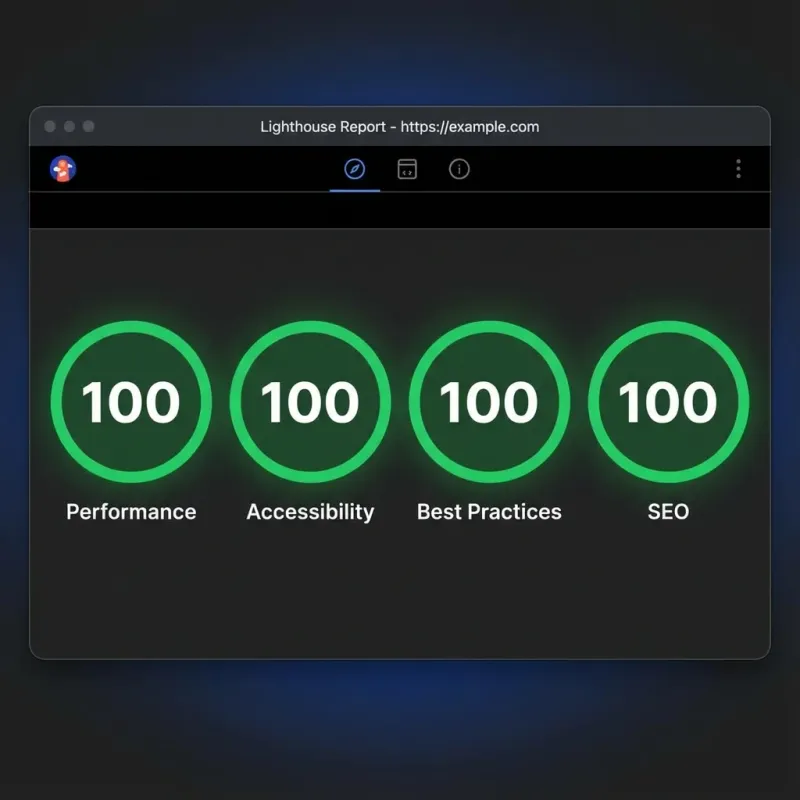
Example of a Lighthouse report highlighting Core Web Vitals scores for a Perth venue. (Image will be added later.)
Practical Tips to Improve Each Metric
1. Speed Up LCP with Image Optimization
The biggest culprit for slow LCP is usually unoptimized images. As both photographers and developers, we tackle this from both sides:
- Shoot for the web: Capture images at the ideal resolution and aspect ratio for digital use, reducing the need for heavy cropping or resizing later.
- Export in modern formats: Deliver images as WebP (with JPEG fallbacks) and generate multiple sizes for different screen resolutions.
- Serve via CDN: Use a global content‑delivery network to ensure fast loading no matter where your customers are in Perth.
These steps keep your mouth‑watering food photos looking stunning while loading in a fraction of a second—keeping your LCP in the green.
2. Stabilize CLS with Proper Layout Techniques
Layout shifts happen when elements load asynchronously or when images and ads don’t have defined dimensions. To keep your menu stable:
- Always include
widthandheightattributes on images and videos. - Reserve space for dynamic content (like testimonials or booking widgets) with CSS aspect‑ratio boxes.
- Avoid inserting new content above existing content while the page is loading.
A stable menu means customers can browse your dishes without frustrating jumps, reducing accidental clicks and improving their overall experience.
3. Boost INP by Reducing JavaScript Bloat
Many restaurant websites are built on bloated WordPress themes or page builders that load unnecessary JavaScript. This slows down interactions like filtering menu items or submitting a booking form.
We build with Astro, a modern static‑site generator that sends only the essential JavaScript. Compared to traditional WordPress sites, Astro‑based sites typically respond 2–3× faster while being easier to maintain. If you’re considering a website rebuild, read our comparison of Astro vs WordPress for hospitality websites.
The Photographer‑Developer Advantage
Most photographers deliver beautiful high‑resolution images that are perfect for print but disastrous for the web. Most developers compress those images until they look pixelated and unappetizing. We bridge the gap.
Our unique combination of professional photography and web development expertise means your visual content looks stunning and loads quickly. We understand both the art of making food look irresistible and the science of delivering those images at lightning speed—giving you a competitive edge that most Perth venues simply don’t have.
Want to see how professional food photography can transform your menu while keeping your Core Web Vitals in the green? Read our case study on the ROI of professional food photography for Perth venues.
Performance Isn’t an Optional Extra
Your website is your digital front door. If it’s slow, unstable, or frustrating to use, customers will walk right past it. In today’s market, performance isn’t an optional extra—it’s a feature that directly affects bookings.
The venues that invest in fast, well‑optimized sites aren’t just getting better technology—they’re getting more customers, higher search visibility, and a stronger brand reputation. They’re turning technical excellence into commercial advantage.
Curious How Your Current Site Performs?
You don’t have to guess about your site’s Core Web Vitals. We offer a free, no‑obligation mini‑audit that shows exactly where your site stands and what you can do to improve it.
Ready to turn speed into your competitive edge? Test your site speed and request a mini audit—if your scores are in the red, we’ll show you exactly how to fix them and start converting more hungry browsers into loyal customers.