

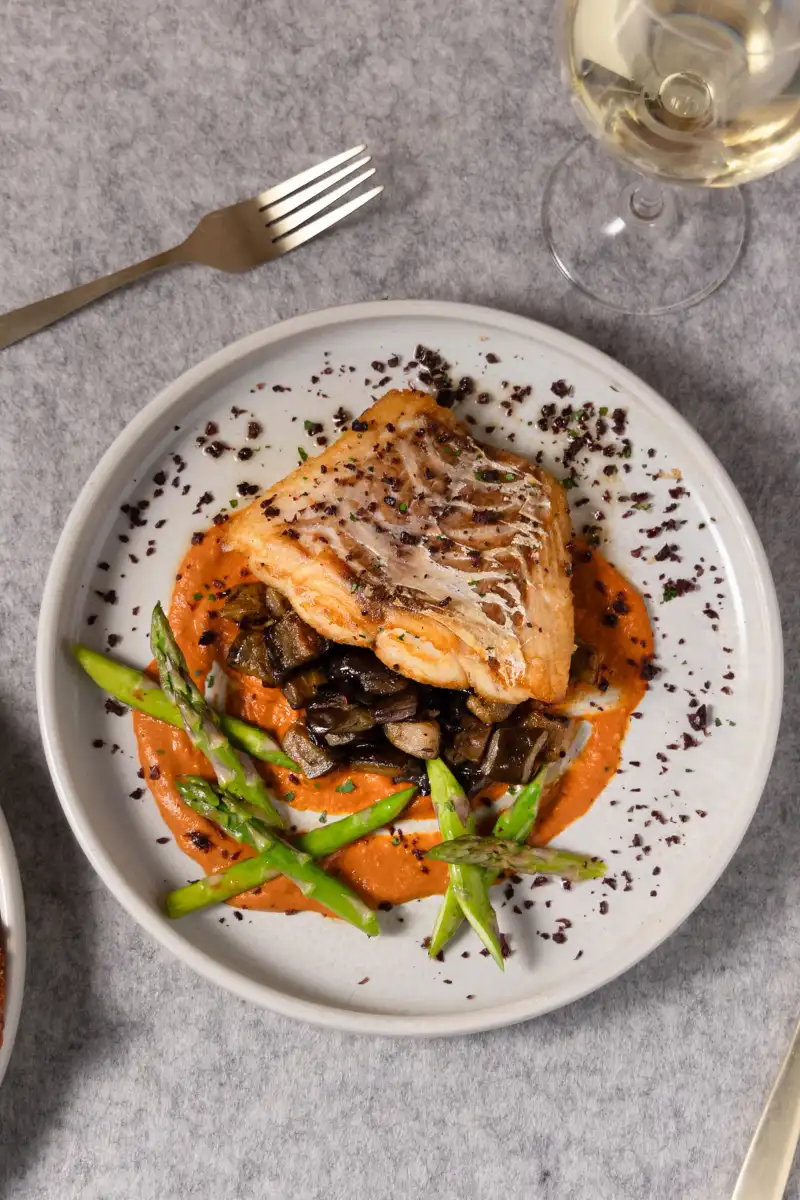
The Light That Sells: Why Lighting Matters for Perth Food Photography
When customers scroll through delivery apps, browse your Instagram, or visit your website, they’re making split-second decisions based on how your food looks. And nothing influences how food looks more than lighting.
The right light can make a dish look fresh, vibrant, and irresistible. The wrong light can make the same dish look flat, unappealing, or—worst case—unappetising. For Perth cafés competing for attention in a crowded market, understanding lighting isn’t optional. It’s the difference between scroll-past and stop-and-order.
This guide breaks down the pros and cons of natural light, artificial light, and hybrid approaches—specifically for Perth cafés and their unique environments, from sun-drenched coastal venues to moody basement wine bars.
Natural Light: The Perth Café Sweet Spot
Perth is blessed with over 265 sunny days per year—more than almost any other Australian capital. This abundance of natural light makes it an ideal environment for food photography that feels authentic, fresh, and inherently “Perth.”
Natural light creates soft gradients, true-to-life colours, and a sense of warmth that’s difficult to replicate artificially. When used well, it makes food look exactly as it would to a customer sitting at your café enjoying their meal.
Why Natural Light Works for Perth’s Coastal Vibe
Cafés in Fremantle, Scarborough, Cottesloe, and City Beach often lean into a bright, airy aesthetic that matches their coastal surroundings. Natural light reinforces that vibe, giving dishes a sun-kissed glow that feels authentically Western Australian.
The research backs this up: Studies in food marketing show that images lit with natural light are perceived as 40% fresher and more appetising than those lit with harsh artificial sources. That’s a powerful advantage when you’re competing for attention on UberEats, DoorDash, or Instagram.
Best Natural Light Conditions in Perth
| Time of Day | Light Quality | Best For |
|---|---|---|
| Golden hour (6-7am summer / 7-8am winter) | Warm, directional, dramatic | Hero shots, lifestyle images, outdoor seating |
| Mid-morning (9-11am) | Bright, neutral, soft through windows | Menu photography, flat lays, consistent colour |
| Overcast days | Diffused, shadowless, even | Detailed product shots, no harsh shadows |
| Late afternoon (3-5pm) | Warm, angular, atmospheric | Lifestyle shots, venue ambiance, drinks |
| Golden hour (5-6pm summer / 4-5pm winter) | Rich, golden, romantic | Fine dining, wine, desserts |
Limitations of Relying Solely on Natural Light
Natural light is unpredictable. Cloud cover, time of day, and seasonal changes can drastically alter the look of your photos—sometimes within minutes. Perth’s strong summer sun can also create harsh shadows and blown-out highlights if not managed carefully.
Key limitations:
- Inconsistent: Photos shot at 9am look different from those shot at 2pm, making menu consistency challenging
- Time-restricted: Only usable during daylight hours, excluding evening service
- Weather-dependent: Overcast days change the mood entirely; rain days may require rescheduling
- Position-dependent: Requires specific window placement and table positioning
- Seasonal variation: Winter light in Perth is dramatically different from summer (sunset at 5:30pm vs 7:30pm)
If your café serves dinner or operates into the evening, or if you’re in a basement or interior space in the Perth CBD or Northbridge, you’ll need a backup plan.
When Artificial Light Wins
Artificial lighting gives you consistency and control—essential for creating a cohesive visual brand across your menu, website, social media, and delivery platforms. It’s the professional standard for high-volume commercial food photography.
Consistency Across All Shooting Conditions
With a well-configured studio light setup, every dish looks identical whether you shoot at 6am or 10pm, in summer or winter, on a sunny day or during a storm. This consistency is especially valuable for:
- Cafés that update menus frequently: Seasonal specials, rotating dishes, and new items can be photographed anytime
- High-volume shoots: Photographing 20+ dishes in a single session requires reliable, unchanging light
- Delivery platform requirements: UberEats, DoorDash, and Menulog prefer consistent image styles across your menu
- Multi-location venues: If you have cafés in Fremantle AND Leederville, artificial light ensures brand consistency
Highlighting Texture and Detail
Artificial lights can be positioned with precision to accentuate specific elements that make dishes look irresistible:
- The glisten on a glaze or sauce drizzle
- The crisp edge of a pastry or toast
- The steam rising from a hot drink or fresh dish
- The bubbles in a cocktail or sparkling water
- Texture separation in layered dishes, salads, or bowls
This level of precision is difficult—often impossible—to achieve with natural light alone, where you’re working with whatever angle the sun provides.
Artificial Lighting Options for Food Photography
| Light Type | Pros | Cons | Best For |
|---|---|---|---|
| Continuous LED panels | What you see is what you get; video-capable; adjustable colour temperature | Less powerful than flash; can heat food | Cafés, casual dining, video content |
| Softbox with strobe | Powerful; consistent colour; freezes motion | Requires experience; higher investment | High-end restaurants, detailed menu shots |
| Ring lights | Even, shadowless; affordable | Flat look; distinctive catchlights | Quick social media shots, overhead flat lays |
| Portable LED wands | Flexible; creative effects; compact | Limited coverage; best as accent | Adding highlights, accent lighting |
Hybrid Approach: The Professional Standard
Most professional food photographers in Perth—ourselves included—use a hybrid approach. We start with natural light as a base, then add artificial fill or accent lights to soften shadows, boost colours, or highlight key details.
This method combines the authenticity of natural light with the control of artificial lighting, resulting in images that look both realistic and polished. The food appears as it would in your café, but better—enhanced without looking “studio fake.”
How We Use Hybrid Lighting
- Position near the best natural light source (usually a large north-facing window)
- Set up a reflector opposite the window to bounce light back and fill shadows
- Add a subtle LED fill on the shadow side if needed, matched to the window’s colour temperature
- Use a small accent light to add highlights on glossy sauces or drinks if the natural light is too flat
- Adjust in real-time as clouds pass and natural light changes
For more on styling and visual trends that complement these lighting techniques, see our Perth Food Photography Style Guide for 2025.
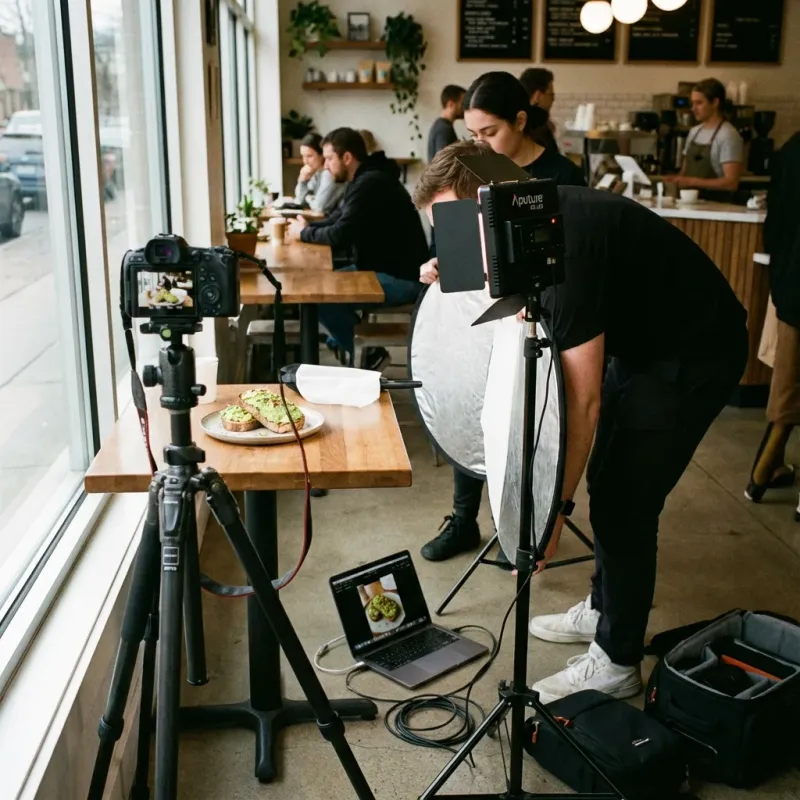
Hybrid lighting in action: natural window light provides the base, while a small LED panel on the right fills shadows for a balanced, appetising result.
Lighting Recommendations by Perth Venue Type
Different venues call for different lighting approaches. Here’s our recommendation based on venue type and location:
| Venue Type | Recommended Approach | Why |
|---|---|---|
| Coastal café (Fremantle, Cottesloe, Scarborough) | Natural light primary | Matches the bright, fresh brand identity; abundant windows |
| Brunch spot (Mount Lawley, Leederville, Subiaco) | Hybrid | Natural base for authenticity; fill for consistency across menu |
| CBD café (basement or interior) | Artificial primary | Limited or no natural light; full control needed |
| Wine bar (Northbridge, Perth CBD) | Artificial primary | Evening service; moody aesthetic requires controlled lighting |
| Fine dining restaurant | Artificial or hybrid | Precision required for premium presentation; evening service |
| Food truck or market stall | Natural light | Outdoor operation; natural light reinforces authentic, casual brand |
| Bakery (early morning service) | Hybrid | Best products ready before optimal natural light; artificial fill essential |
Practical Tips for Perth Café Owners
Whether you’re preparing for a professional shoot or trying to improve your own smartphone photos, these tips will help you make the most of lighting:
- Assess your venue’s natural light: Identify the brightest windows and the times of day when the light is softest (usually mid-morning or late afternoon in Perth). North-facing windows receive the most consistent light throughout the day.
- Plan shoots around your kitchen’s peak: If you’re a breakfast-focused café, schedule photography early when the light is fresh and your kitchen is producing its best work. For dinner restaurants, plan shoots during prep time with artificial lighting.
- Create a “photo table”: Identify one or two spots in your venue with the best natural light and keep them available for photography. Even moving dishes 2 metres can dramatically improve lighting.
- Invest in a simple lighting kit: A portable LED panel ($100-$300) or a reflector ($30-$50) can be a game-changer for filling shadows on overcast days or extending your shooting window into the evening.
- Watch the colour temperature: Natural light is warm in the morning and evening, neutral midday. Artificial lights should match—warm LEDs (2700-3200K) for ambient shots, neutral (5000-5500K) for food that needs to look true-to-colour.
- Work with a photographer who understands Perth: Look for a Perth-based food photographer who can adapt to your space and lighting conditions, whether that’s harnessing the golden hour at a Cottesloe beachside café or creating a studio-like setup in a CBD basement.
DIY vs Professional: When to Invest
Can you shoot your own food photos? Yes—but there’s a significant difference between “good enough for Instagram Stories” and “good enough for your menu, website hero images, and delivery platforms.”
DIY Photography Works For:
- Daily Instagram Stories and behind-the-scenes content
- Quick specials announcements
- Team photos and casual venue shots
- Testing which dishes photograph well before investing in professional shots
Professional Photography Is Worth It For:
- Your website’s hero images and menu pages
- Google Business Profile photos (these directly impact bookings)
- Delivery platform listings (UberEats, DoorDash, Menulog)
- Printed menus and signage
- PR and media kit images
- Advertising campaigns (Meta, Google Display)
The rule of thumb: if it’s permanent or high-visibility, invest in professional photography. If it’s temporary or casual, DIY is fine.
Frequently Asked Questions: Café Photography Lighting
Ready to Illuminate Your Menu?
Great food photography isn’t just about having a good camera—it’s about understanding how light shapes perception and appetite. Whether you’re a sun-drenched coastal café in Fremantle or a moody inner-city wine bar in Northbridge, the right lighting strategy can make your dishes look as good on screen as they taste in person.
The venues that stand out in Perth’s competitive hospitality scene are the ones that invest in visual presentation. And lighting is where that presentation starts.
Need help deciding which lighting approach is best for your venue? Explore our Perth food photography packages and let’s plan a shoot that captures your food in its best light—literally. We’ll assess your space, recommend the optimal lighting approach, and create images that drive orders and bookings.
Related reading: Explore our Perth Food Photography Style Guide for 2025, learn about the ROI of professional food photography, and see how photography boosts dish sales through menu engineering.