Why growing websites become messy
Most Perth business websites start small. Then the business adds a new service, a campaign page, a suburb page, a downloadable guide, and a few more offers. Without a system, each new page solves the same design problems again from scratch.
That is how sites drift into inconsistent buttons, competing CTA styles, different card layouts, and pages that all feel like they belong to slightly different brands.
What a design system actually does
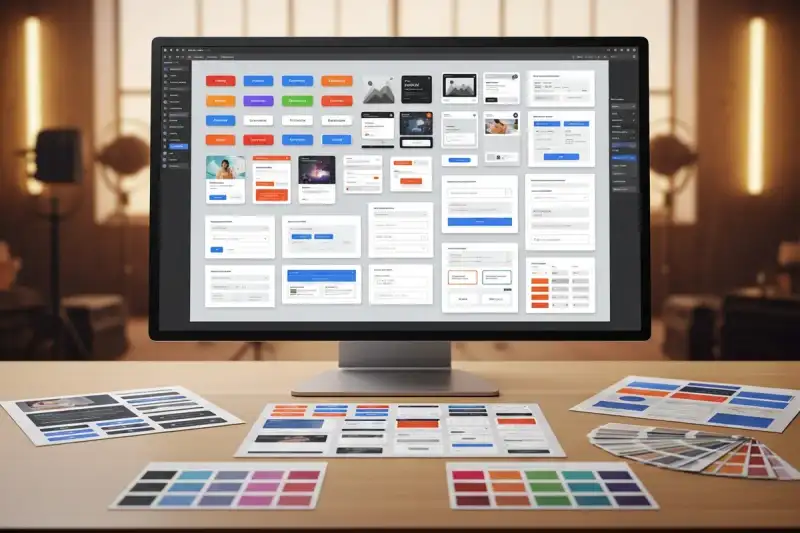
A design system is not just a Figma file. It is a shared set of reusable decisions covering:
- typography
- colour and contrast
- spacing
- cards and section patterns
- forms and CTA hierarchy
- guidance on when each pattern should be used
That structure is especially useful when a business is growing across service pages, campaigns, and content. It also supports the same performance discipline discussed in our Core Web Vitals guide because efficient components are easier to keep fast than one-off layouts.
Where the ROI shows up
Faster launches
Teams stop reinventing buttons, testimonial blocks, FAQ modules, and form layouts every time a new page is needed.
Better consistency
Users learn your patterns once. That reduces friction because the interface behaves predictably.
Cleaner handoff
When rules are documented, design and development spend less time guessing. That is one reason many growing teams invest in UX/UI design services before the site starts fragmenting.
Easier content scaling
If you are publishing multiple service or location pages, a system helps you keep structure strong while still adapting the message to intent.
What should be standardised first
You do not need a large design system to start. For most Perth businesses, standardise these first:
- headline hierarchy
- primary and secondary CTA styles
- testimonial and proof modules
- FAQ blocks
- form components
- service-page section order
Those patterns do the most work across sales-driven websites.
Final take
Design systems are operational leverage. They reduce inconsistency, speed up launches, and make the website easier to extend without weakening UX.
If your site is growing and every new page feels like a fresh design project, it is time to formalise the basics. Start with a focused UX/UI design engagement and keep the supporting page strategy connected to clear UI and UX responsibilities.