If your website is meant to generate leads rather than just exist online, the more useful comparison is not “can I build it myself?” but “what will help this site perform over the next two years?” For many businesses, that is the point where custom web design in Perth becomes the safer commercial decision than another round of builder tweaks.
DIY website builders solve the launch problem, not the growth problem
Wix, Squarespace, and similar platforms are good at one thing: getting a basic website live quickly. That matters when you are validating an offer, testing a new service, or working with almost no budget.
The problem shows up later. Once the site needs to rank for local searches, support paid traffic, or convert visitors into enquiries, the builder starts imposing tradeoffs you did not notice on day one. The site may still “look fine,” but it becomes harder to improve the parts that actually affect revenue.
Where DIY sites usually break first
The most common failure pattern is not design alone. It is the combination of performance drag, structural SEO limits, and template constraints that make every future improvement slower and more expensive.
1. Speed and Core Web Vitals
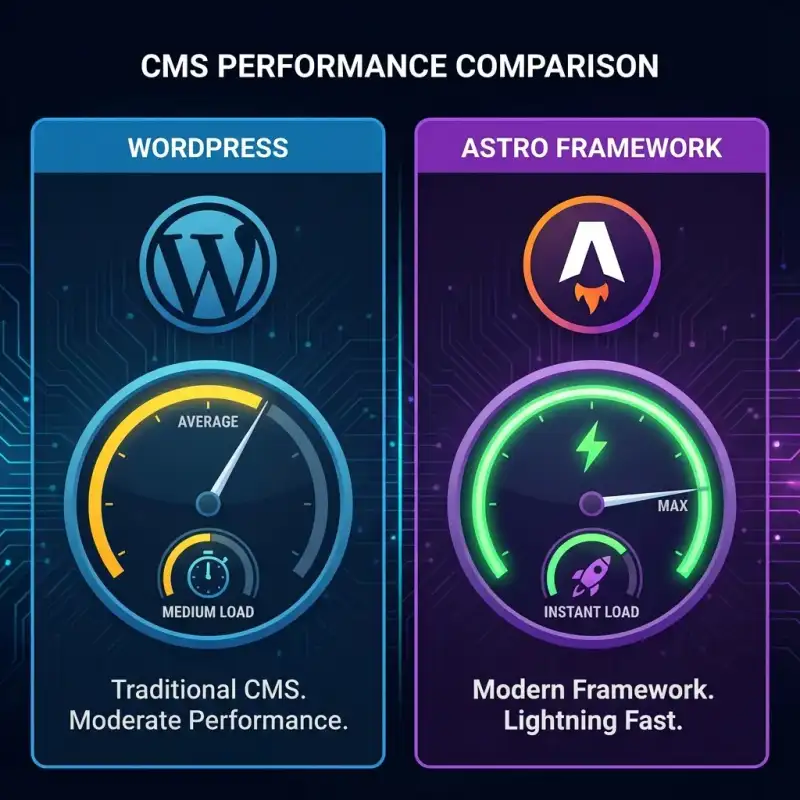
Builder platforms often ship more code than a business site actually needs. That extra overhead pushes down mobile performance, especially once animations, galleries, forms, embeds, and third-party tools are layered in. If speed is already hurting engagement, review our website speed optimization guide before you treat the problem as “just hosting.”
Slow pages damage rankings and conversion at the same time. They make it harder for visitors to trust the site, harder for Google to see strong user signals, and harder for paid traffic to turn into an enquiry.
2. Template-driven design decisions
A builder gives you a fast starting point, but it also steers the site toward the same layout logic everyone else is using. That is fine for a brochure page. It is weak for a competitive business that needs better message hierarchy, stronger proof placement, and a clearer path to action.
If you are deciding whether the issue is the platform or the page structure, compare this article with our breakdown of custom vs template web design in Perth. That is usually where the commercial difference becomes obvious.
3. Limited control over growth architecture
The more your site expands, the more you need deliberate URL planning, cleaner internal linking, page-speed control, and predictable publishing workflows. That matters even more if you are building service clusters, suburb pages, or support content around a core commercial hub.
Builder platforms can handle some of this, but they make it harder to shape the system exactly around the way you want the site to grow. Once the site needs stronger local intent signals, clearer content architecture, or deeper technical cleanup, the platform becomes a constraint rather than a shortcut.
The hidden cost is not the subscription. It is the ceiling.
Businesses often compare DIY and custom only through setup cost. That misses the more important question: how expensive is it when the site underperforms for the next 12 to 24 months?
- Weak mobile UX means more users drop before they reach the CTA.
- Generic layouts make the offer feel less credible than it should.
- SEO constraints slow down the site’s ability to rank for service and location searches.
- Migration pain later usually costs more than planning the right structure earlier.
This is why DIY sites often feel cheap at launch but expensive in hindsight. The real cost is the opportunity lost while the business keeps patching around a platform that no longer fits the job.
When DIY is still the right move
A builder is still a reasonable choice if the business is very early, the site is mostly an online placeholder, or the budget does not justify a custom build yet.
- Use DIY when you need something simple online quickly.
- Use DIY when the offer is still being tested and the site is not yet a real acquisition channel.
- Use DIY when ranking, speed, and conversion are not yet commercially important.
The mistake is not choosing DIY. The mistake is staying with DIY after the site has already become part of the sales system.
Signs the business has outgrown the builder
- You are investing in SEO or paid traffic and do not want to send visitors into a slow, generic experience.
- You need a redesign anyway because the offer, trust proof, or content structure no longer fits the business.
- You need more control over mobile UX, which is why our mobile-first UX fixes guide is often a better next step than another theme adjustment.
- You are expanding service clusters or local landing pages and need cleaner internal linking and topical structure.
- You keep working around the platform instead of improving the site itself.
If that sounds familiar, review the warning signs in our Perth website redesign checklist. Most businesses already know the site is holding them back before they admit the platform is part of the reason.
How to migrate without turning the redesign into an SEO loss
Once the decision is made, the next risk is migration quality. A better platform does not help if the launch is sloppy. Redirects, canonicals, metadata, and page mapping need to be planned before the switch happens.
Use our website migration guide for Perth businesses to map the move properly. If the rebuild also needs cleaner structure for search engines and AI summaries, pair that with our GEO-ready web design framework before launch.
The better question is not “DIY or custom?” It is “what does this site need to do?”
If the website is only there to prove the business exists, a builder can be enough. If the website needs to rank, convert, support location growth, and hold its own against competitors, custom web design usually becomes the better long-term choice.
That does not mean every business needs an overbuilt platform. It means the site should be shaped around the commercial job it has to do.
If you want a second opinion before you migrate, get in touch and we can review whether the current builder is still fit for purpose or whether the business has already outgrown it.